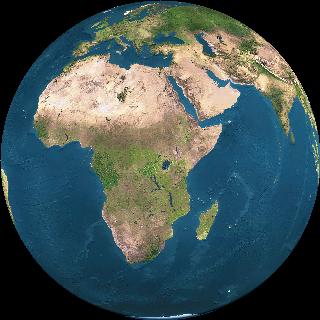
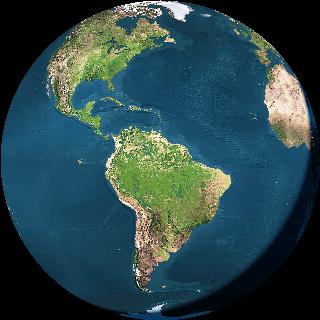
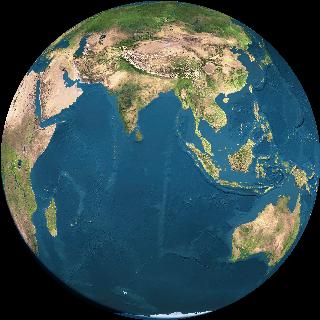


The mission of TGD is to provide
connections to every corner of
this remarkable world.
connections to every corner of
this remarkable world.
 | |  | |  | |  | |  |
| Remarkable images of people, news and wonders. |
| Recent images from Afghanistan |


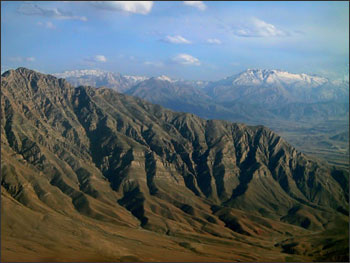
| The White Mountains near Tora Bora. (C) Foley, Michael 2003/The Streets of Kabul |
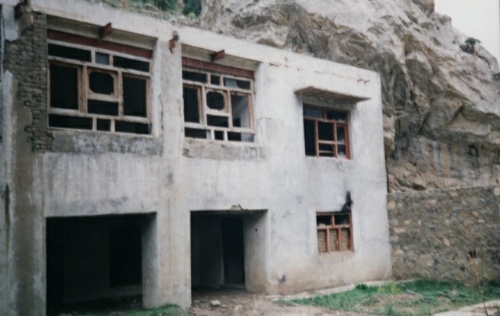
| Another view of the house. Photographed by Said Marjan Zazai www.afghanan.net |
| Usama bin Laden's house in Zazi, Afghanistan. The window on the right side of the picture was the room where Laden used to hide under this big rock. Photographed by Said Marjan Zazai www.afghanan.net |
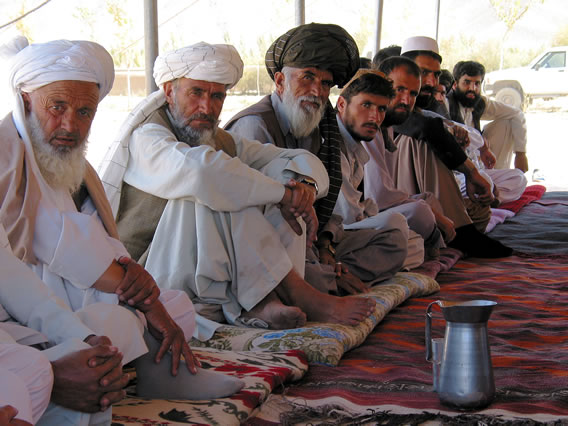

| Generations in Afghanistan www.afghanan.net |
| Girls back at school (C) Foley, Michael 2003/The Streets of Kabul |

| A mother lifts her burka to speak to her daughter as they flee Kunduz (Image, right, from November 25, 2001) www.time.com SION TOUHIG/GETTY IMAGES |
| At a Pashtun wedding (C) Foley, Michael 2003/The Streets of Kabul |
| kites fly again (C) Foley, Michael 2003/The Streets of Kabul |
| Other remarkable images |
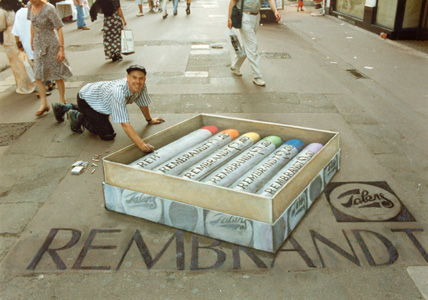
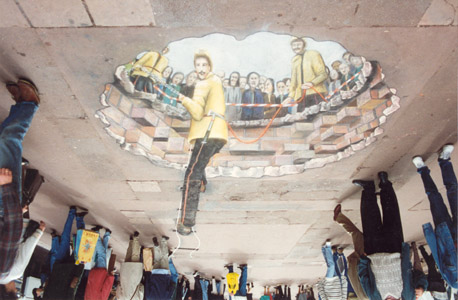
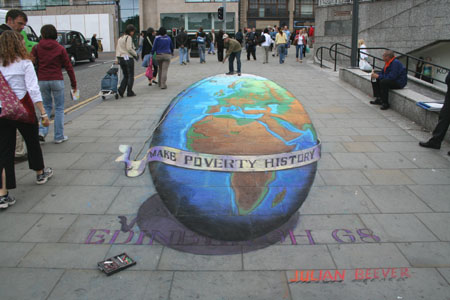

| The amazing 3-d sidewalk art of Julian Beever! See more of his art here. |
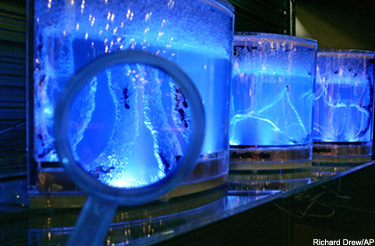
| Ants, seen through a magnifying glass, dig their tunnels in lighted Antworks, from Fascination, at the American International Toy Fair in New York. |
| A bird sits on a tree during a solar eclipse on March 29, 2006 seen from Islamabad, Pakistan. (Photo by Aamir Qureshi/AFP/Getty Images) |
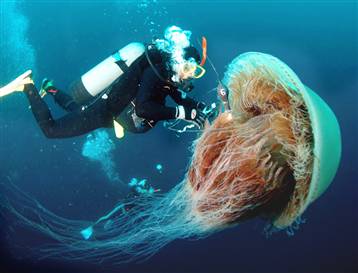
| Jumbo jellyfish, up to 6 pounds have been causing problems for Japanese fishermen. Yomiuri Shimbun / AFP - Getty Images file |

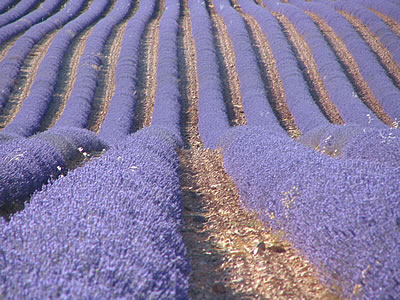
| Fields of lavender Provence, France www.web-provence.com |
| The Dragon Dance for the celebration of Chinese New Year in Sarawak, Malaysia |
| One in a million! Sent in by Petie, Austin, Texas |

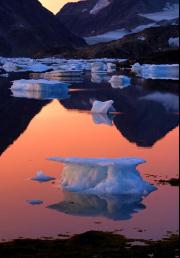

| Warming Disasters By SETH BORENSTEIN, AP Science Writer WASHINGTON - Scientists are not so sure that the oncoming train of global warming can be avoided. "In the short-term, I'm not sure that anyone can stop it," said John Walsh, director of the Center for Global Change and Arctic System Research at the |
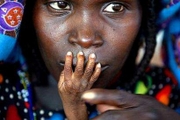
| FAMINE IN NIGER This award-winning photo, shows the emaciated fingers of a one year old mother's lips at a feeding station in Niger. Photographer Finbarr O'Reilly, Reuters |
| Kashmiri family sits outside their home, leveled by earthquake. Surviving winter will be difficult. www.savethechildren.org |
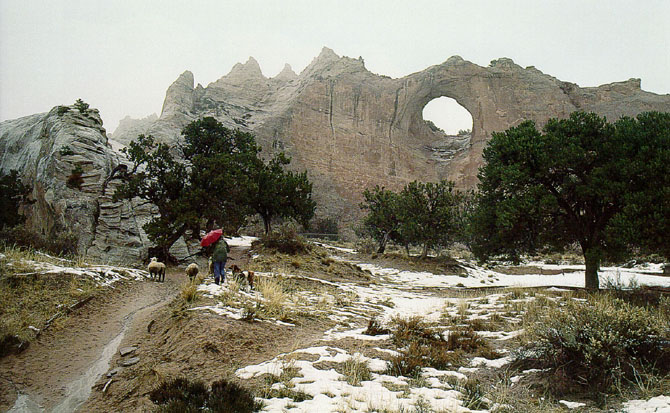
| Window Rock Arizona. Water, wind and ice have created this large window in the sandstone. |
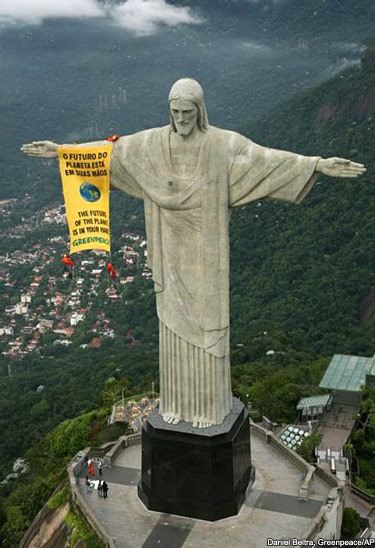
| Greenpeace activists the famous Christ statue in Rio de Janeiro, on March 16, 2006. It read, "The future of the planet is in your hands." Photo: Daniel Beltra, Greenpeace/AP |
| Recent facts and images from the Israeli-Palestinian conflict: |


| I I I I I I I I I I I I I I I I I I I I I I I I I I I I I I I I I I I I I I I I I I I I I I I I I l l l l |


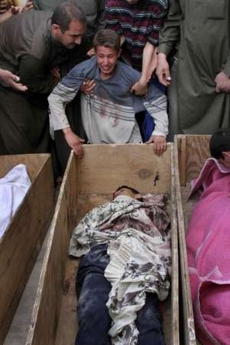
| Relatives of Palestinian Khalid Madi, 16, grieve while mourners, unseen, carry his body out of the family house during his funeral at Khan Younis in southern Gaza Strip, Monday, March 8, 2004. The youth was driving a tractor on the family farm when he was hit in the back by a large-caliber bullet shot from Israeli forces, doctors said. (AP Photo/Khalil Hamra) |
| The remains of a bus destroyed by a suicide bomber. Eight people were killed in the attack which was carried out on February 22, 2004. Photo credit: Ayelet Even-Nur |
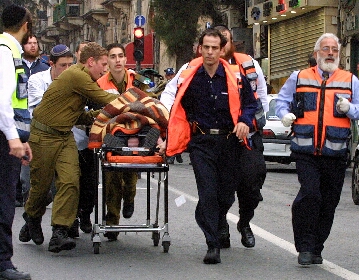
| Israeli rescue workers recover bodies from the wreckage of a destroyed bus following an explosion in Jerusalem on August 19, 2003. A Palestinian suicide bombing blew apart a bus, killing 23 people and wounding about 80. Photo credit: Haim Zach, Reuters |
| www.openbethlehem.org |


| www.miftah.org |
| "Israel has demolished almost 12,000 Palestinian homes, leaving some 70,000 without shelter." -- Jeff Halper of Israeli Committee Against House Demolitions |
| More than 4,000,000 m² of cultivated Palestinian land has been deliberately destroyed by Israel since late September 2000. www.miftah.org |
| next to an ambulance at Bodies lie on stretchers the scene of a bombing base near Tel Aviv on September 9, 2003. Photo credit: Nir Elias, Reuters |
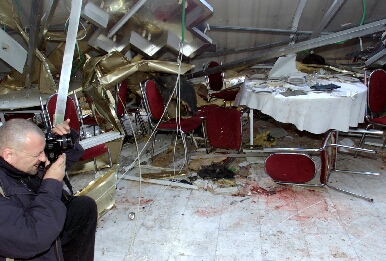
| March 28, 2002 - A photographer photographing the destruction at the Palestinian suicide bomber blew himself up during a Passover seder, killing 28 people and wounding around 140. Photo credit: Laszlo Balogh, Reuters |


| British activist Tom Hurndall shot in the head by Israeli sniper while carrying 3 Palestinian children out of crossfire. He died on January 13, 2004 after 9 months in a coma. |
| www.haaretz.com |

| On March 16, 2003, 23-year-old American activist Rachel Corrie was run over by an Israeli bulldozer while protesting against the demolition of a Palestinian home in Rafah. There has been no American investigation of this matter. |
| www.wikipedia.org |
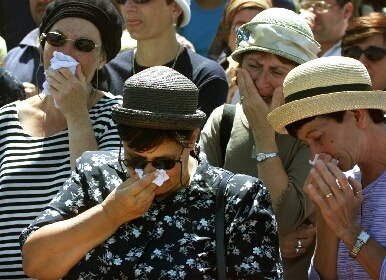
| Mourners cry during the funeral for Jewish settler Doron Zisserman who was killed by Palestinian gunmen at the Einav settlement in the northern West Bank. June 1, 2003 Photo credit: Reinhard Krause, Reuters |


| November 21, 2002 - The covered bodies of victims of a suicide bombing, lined up at the side of the road. A Palestinian suicide bomber killed 11 people on November 21, 2002 when he blew himself up on a crowded bus during the morning rush hour in Jerusalem. Photo credit: Gil Cohen Magen, Reuters |
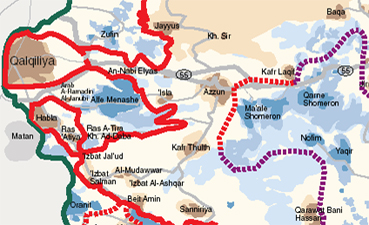
| "The map displays three kinds of roads in the West Bank: roads on which Palestinian travel is permit is required, roads on which Palestinians are forbidden to travel unless they have a special permit, and roads on which only Israeli citizens are allowed to travel." www.btselem.org |
| "While the built-up area of the settlements in the West Bank covers 1.7 percent of the West Bank, the settlements control 41.9 percent of the entire West Bank." www.btselem.org. |
| Israeli ambulance workers help a wounded victim of a suicide bombing in Jerusalem March 21, 2002. A Palestinian suicide bomber killed three people and wounded more than 40 on a busy Jerusalem shopping street. Photo credit: Tsafrir Abayov, Reuters |
Occupied Territories Israel Palestinians killed by Israeli 3289 56 security forces Palestinians killed by Israeli 41 civilians Israelis killed by 453 539 Palestinians Palestinian minors killed by 669 1 Israeli security forces Israeli minors killed by Palestinians 38 80 Palestinians killed during the course 317 of an assasination Palestinians who were the object of 203 a targeted killing Source: www.btselem.org |
| "The barrier route includes large “fingers” which reach deep into the West Bank to surround the Ariel and Qedumim settlements. In addition, a new section of the Barrier has been added around Ma'ale Adumim and the settlements near it. Given the settlements, constructing the barrier around them will have widespread ramifications on the freedom of movement for the Palestinian population in the West Bank." www.btselem.org |
| Water Deprivation "One of the first military orders of [after 1967] was the confiscation of almost all West Bank wells. Since then, drilling for new wells has been banned and quotas have been imposed on the existing ones. The amount of water allocated to Palestinians has been capped at 1967 levels, despite the subsequent growth in population. Instead of the minimum of 150 liters daily per person, recommended by the World Health Organization, Palestinians have to make do with only 50-85 liters and an ongoing severe shortage of running water. In contrast, in the surrounding Israeli settlements each settler is provided with 280 to 300 liters daily." www.miftah.org "The water shortage violates the basic human rights of Palestinian residents of the Occupied Territories such as the right to health, to adequate housing, to equality, and to benefit from their natural resources. This harm results from Israeli policy, in effect since 1967, based on an unfair division of resources shared by Israel and the Palestinians." www.btselem.org |
| East Jerusalem "Israel has expropriated more than 5,845 acres of mostly of East Jerusalem - for construction of ten major Israeli settlement neighborhoods. [Simultaneously] Israel has enforced a strict quota on Arab "Israel has expropriated more than construction in East Jerusalem." 5,845 acres of mostly 5,845 acres of mostly Palestinian-owned land - one third Palestinian-owned land - one third of East Jerusalem - for construction of ten major Israeli settlement neighborhoods. [Simultaneously] Israel has enforced a strict quota on Arab construction in East Jerusalem." [This follows a policy from 1976 which makes its stated goal to create a large Jewish majority in Jerusalem.] "Israeli settlement neighborhoods, with a population approaching 200,000, will isolate Palestinian neighborhoods in East Jerusalem from their West Bank hinterland" [making future Palestinian claims for East Jerusalem more difficult]. The American Committee on Jerusalem Now Amer. Task Force on Palestine |
| l l l l l l |
| The International Law The Fourth Geneva Convention forbids an "Occupying Power" to "transfer parts of its own civilian population into the territory it occupies" (article 49(6)). Israeli annexation of East Jerusalem has been deemed illegal by the UN Security Council (resolutions 267), and has not been recognized by other states. There are 400,000 Israeli settlers living in East Jerusalem and the West Bank. Sources: Fourth Geneva Convention and www.btselem.org |
| TGD Analysis: Jerusalem should be cornerstone of enduring peace Mutual recognition between Palestinians and Israelis can begin with mutual recognition of both Palestinian and Israeli rights to the city of Jerusalem. Israeli leaders seek to impose terms regarding the Israel-Palestine border. This seems more like hegemony than a path to peace and mutual recognition. Jerusalem is held as sacred by three major religions, and more than half of the people on Earth. Both Palestinians and Israelis claim Jerusalem as their capital. In the original UN partition plan in 1947, Jerusalem was designated as an international city. The strongest cornerstone for building peace and mutual recognition between Israelis and Palestinians would be a peace agreement that recognizes Jerusalem as an international city and the united capital for the two States of Israel and Palestine. Regional stability simply is not realistic so long as only one side has control of Jerusalem. In the short term the security-conscious Israelis could control the security of Jerusalem, but over time this would become a shared responsibility. Israeli control over who can build in East Jerusalem or its suburbs would be turned over to a Palestinian building commission. Growth of Israeli settlements east of Jerusalem would be regulated by Palestinians. Israelis would retain control of the regulation of who can build in West Jerusalem and its suburbs. Over time the two commissions would merge. This Common Sense agreement would include Israeli recognition of Palestine along largely pre-1967 borders, with complete control over all resources therein. Palestinians would agree to resolve the refugee issue by accepting compensation to be provided to the millions of Palestinian refugees, and the right to live in the Palestinian State, but not Israel, except in a relatively small number of cases. These terms are very similar to what was proposed in the Geneva Accord concept. This concept blends the Geneva Accord plus a unified Jerusalem as an international city and the capital of both nations. Long term regional peace and stability can only be accomplished when the parties share a united Jerusalem. ***A detailed version of this analysis will appear in a future Common Sense column on TGD's home page. |
| and the reality of Slavery today! |
| Slavery's terrible history... |
| A person enters debt bondage when their labour is demanded as a means of repayment of a loan, or of money given in advance. Usually, people are tricked or trapped into working for no pay or very little pay (in return for such a loan), in conditions which violate their human rights. The United Nations Working Group on Contemporary Forms of Slavery estimated in 1999 that some 20 million people are held in bonded labour around the world. www.antislavery.org |
| Debt Bondage is Slavery |


| Along with the rest of her family, 10-year-old Thaku, left, spent eight years in captivity. She went one whole year without seeing her parents, who were chained at night at another location. Photo: DEVELOPMENT AND PEACE www.devp.org |

| To supply labor for the plantation economies of the Americas, Europeans forcibly removed roughly 12 million people from Africa between the 15th and the 19th centuries. These men, women, and children were marched from their homes to the coast and placed on “slavers” like the one pictured in this diagram from an 1808 report on the African slave trade. Designed to carry the largest number of people in the smallest possible space, these ships provided an indescribably horrible experience for the humans chained below decks. Roughly one in six slaves died at sea from disease, malnutrition, and suicide. |
| Photo of Turkish brothel. the methods by which several hundred thousand women and girls are lured by promises of jobs, taken to foreign countries, beaten, raped and sold to be sex slaves. This is a worldwide problem, and this form of slavery is known to exist in Russia, Turkey, China, India, Thailand, the United States, and Eastern and Western Europe. Read how they made this film: http://www.pbs.org/wgbh/page s/frontline/slaves/making/ Or discuss and learn more http://www.pbs.org/wgbh/page s/frontline/slaves/ |
| Children Forced to Fight |

| "I’ve seen people get their hands cut off, a ten-year-old girl raped and then die, and so many men and women burned alive... So many times I just cried inside my heart because I didn’t dare cry out loud." - fourteen-year-old girl, abducted in January 1999 by the Revolutionary United Front, a rebel group in Sierra Leone Human Rights Watch |
| Some 300,000 children are serving as soldiers participate in all aspects of contemporary warfare. They wield AK-47s and M-16s on the front lines of combat, serve as human mine detectors, participate in suicide missions, carry supplies, and act as spies, messengers or lookouts. Child soldiers are being used in more than thirty countries around the world. Human Rights Watch has interviewed child soldiers from countries including Angola, Colombia, Lebanon, Liberia, Sierra Leone, Sudan and Uganda. Human Rights Watch |
| Source: Thomas Clarkson, The History of the Rise, Progress, and Accomplishment of the African Slave-Trade by the British Parliament (1808)—American Social History Project |
| What future for Iraq? |
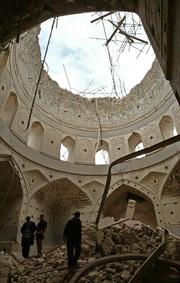



| By DEB RIECHMANN -- Washington (AP) President Bush expressed frustration Wednesday, March 29, 2006, that Iraqis have so far failed to form a unity government, but he said withdrawing U.S. troops from Iraq too early would damage U.S. security. President Bush said that Saddam Hussein's divisive legacy, not continued U.S. involvement in Iraq, is responsible for ongoing sectarian violence that is threatening the formation of a democratic government. (AP Photo/Susan Walsh) |
| TGD Analysis: Piecing together the Iraqi puzzle What happens during the next three to six months will determine whether the new Iraqi government and the American mission in Iraq succeeds or fails. Failure means civil war and this would be a terrible tragedy for the Iraqi people. President Bush can complain about the divisive "legacy of Saddam Hussein," but once he chose to send U.S. forces into Iraq the stability of the country became his responsibility. This war was initiated after several members of the Bush administration, including Bush himself, exaggerated the threat Iraq posed to America, even describing shrill images of "mushroom clouds." Worse still, the management of the conflict and occupation in Iraq has suffered from layers of incompetence from the political leadership in Washington. The only hope for near-term stability and avoiding civil war in Iraq is to neutralize the political forces that are pulling the country apart: Constitutional provisions breaking the country into federal provinces will divide Iraq into culturally isolated enclaves; the prospect of Sunnis in western Iraq having very little say in the use of oil revenues perpetuates fighting because people with no future have very little left to lose; and worst of all, the religious militias which have infiltrated Iraqi law enforcement are acting as death squads. Shiite leaders, after suffering terribly under Saddam's domination will be reluctant to give up these political advantages. In fact, they will probably not agree unless U.S. ambassador Khalilzad, with the backing of President Bush, makes it clear that failure to resolve these sources of sectarian tension will force the beginning of staged withdrawals of American forces. Thus, the decisions of current Iraqi political leaders, not the actions of insurgents, could make it necessary to gradually withdraw American forces. It is their country and their choice to shape Iraq's political future. But American troops should not remain if the choices of the current Iraqi leaders cause civil war there. ***A detailed version of this analysis will appear in a future Common Sense column on TGD's home page. |
| Diverse religious celebrations around the world |


| The Holi festival of color takes place throughout India. This photo was taken in Chennai. Rajesh Agarwal explained, ``Holi is a harvest festival. The religious meaning behind the festival is the celebration of the elimination of evil. Holi is the celebration of the death of Holika, Prahlad's evil aunt. We light a bonfire at night signifying Holika's death,'' says Rajesh Agarwal. By Prince Frederick reporting for The Hindu. Find out more about Hinduism here. |
| Bulgarian children play swirl fireballs 26 February 2006 in the village of Lozen, some 15 km east from Sofia. Bulgarians mark Mesni Zagovezni, an Orthodox Christian holiday during which they chase away evil spirits with fire rituals. Valentina Petrova, AFP/Getty Images Find out more about Christianity here. |
| KOSTROMA, Russia – March 24, 2006 For the first time in many years, the Jewish community of Kostroma, Russia hosted a Bar Mitzvah ceremony this week. Earlier on, Jewish boys reaching the age of adulthood had traveled to Moscow to participate in group Bar Mitzvah events conducted there. Find out more about Judaism here. |
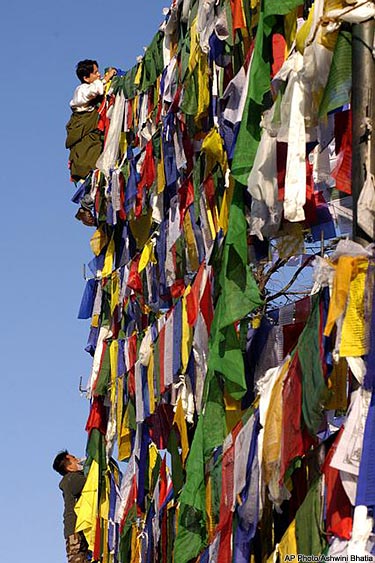
| Tibetans climb high to tie prayer flags during a prayer session on the third day of the Tibetan New Year, Dharmsala, India, Thursday, March 2, 2006. Believed to spread prayers on wind, different colored flags represent the five elements of air, water, sky, earth and fire. AP Photo, Ashwini Bhatia Find out more about Buddhism here. |
| Eid ul-Fitr marks the end of Ramadan, a month of fasting. It is a joyful celebration of the achievement of enhanced piety. It is a day of forgiveness, Eid ul-Fitr marks the of congregation, end of Ramadan, a month end of Ramadan, a month of fasting. It is a of fasting. It is a joyful celebration of the achievement of day of forgiveness, day of forgiveness, moral victory and peace, moral victory and peace, of congregation, fellowship, brotherhood and unity. Muslims are not only celebrating the end of fasting, but thanking their God for the help and strength that they believe he gave them throughout the previous month to help them practice self-control. Find out more about Islam here. |
| *More information on these religions can be found at: http://belief.net/ |